01
2026
When Chatbots Accommodate: What AI Companions Optimize for in Vulnerable Conversations
Minh Duc Chu, Yifan Wu, Zhiyi Chen, Angel Hsing-Chi Hwang, Luca Luceri
arXiv preprint
PhD candidate at the USC Information Sciences Institute, advised by Luca Luceri (SIGNALS Lab) and Kristina Lerman.
Anthropic AI Safety Fellow (Summer 2026).
From Vũng Tàu, Việt Nam 🇻🇳. Based in Los Angeles, CA 🇺🇸.
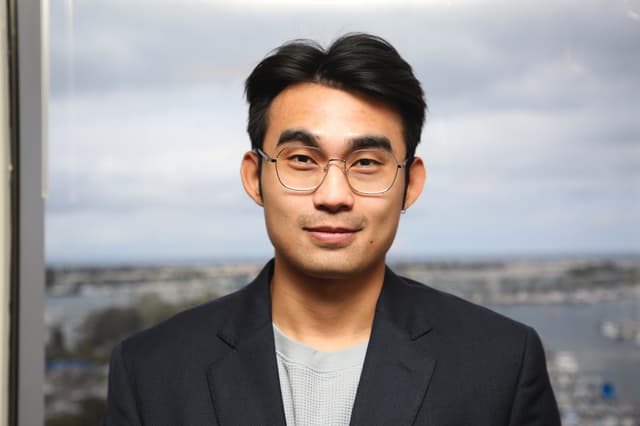
I'm a Computer Science PhD candidate at the USC Information Sciences Institute, advised by Luca Luceri (SIGNALS Lab) and Kristina Lerman. I'm currently an Anthropic AI Safety Fellow.
I started at USC in 2023 and expect to defend in late 2027. Before that, I earned my B.A. with Distinction in Computer Science & Statistics from Carleton College in Minnesota.
My research sits where AI safety and alignment meet mental health. One side is behavioral, a black-box audit of how conversational AI acts over many turns, and how those interactions can compound into harm: emotional dependency, belief spirals, and eating-disorder reinforcement, especially for teens and other vulnerable users. With clinicians and social scientists, I use concrete evaluation, red-teaming harnesses, and post-training safeguards for these risks.
The other side is more fundamental, and the question I most want to answer: for AI to harm people less, to actively mitigate harm, and maybe even leave people better off, especially around emotional manipulation and mental health, it first has to understand the complex psychological and social constructs we live by, like emotions, intimacy, and mental health itself. I work toward this from several angles: mechanistic interpretability, conceptual reasoning, behavioral study, and collaboration with psychologists and psychiatrists.
I grew up in Vũng Tàu on the coast of southern Việt Nam, and now live in Los Angeles. Outside research I box and play tennis.
I work on AI alignment and safety, with a current focus on the shift from AI-as-assistant to AI-as-companion.
What changes about safety when people stop using LLMs and start confiding in them.
Raising a model's EQ: the traits, drives, and failure modes models develop, how complex constructs get encoded as directions inside them, and how the way we treat models may carry downstream weight.
Tuning LLMs to specific online communities without flattening their language or norms.
Surfacing harm patterns — body image, eating disorders — across Twitter, Reddit, TikTok.
Last updated · Oct 2026
The tools I reach for — and, for language models, the four phases I actually work across.
Minh Duc Chu, Yifan Wu, Zhiyi Chen, Angel Hsing-Chi Hwang, Luca Luceri
arXiv preprint
Minh Duc Chu, Kshitij Pawar, Zihao He, Roxanna Sharifi, Ross M. Sonnenblick, Magdalayna Curry, Laura D'Adamo, Lindsay Young, Stuart Murray, Kristina Lerman
EACL 2026
Charles Bickham, Minh Duc Chu, Arianna Yuan, Valerie Lookingbill, Ehsan Mohammadi, Stuart Murray, Kristina Lerman, Emilio Ferrara
ICWSM 2026
Minh Duc Chu, Patrick Gerard, Kshitij Pawar, Charles Bickham, Kristina Lerman
ACII 2026
Minh Duc Chu, Zihao He, Rebecca Dorn, Kristina Lerman
NAACL 2025
Zihao He, Minh Duc Chu, Rebecca Dorn, Siyi Guo, Kristina Lerman
EMNLP 2024
Reviewing, organizing, and teaching across the NLP and computational social science communities.
Happy to hear from anyone working on AI alignment, model welfare, or social NLP — and from anyone in Los Angeles looking for a tennis partner.